After Chris Stein and Debby Harrie met Fab 5 Freddie in the Downtown scene they went Uptown to see the parties over there. They famously produced 'Rapture' as a tribute and used Chic's 'Good Times' as inspiration. Fab 5 Freddy famously gets a shout-out and Chris Stein went on to produce the soundtrack for Wild Style.
This show occurred a few weeks before the famous series of Clash shows at Bonds which featured rap/hip hop acts, and is likely the first rock/rap fusion ever recorded. This is an audience recording, but the quality is fairly decent.
dinsdag 29 maart 2011

Books: The Downtown Book & Art After Midnight
Two of the best books to read on the period are:

The Downtown Book: The New York Art Scene 1974-1984
Edited by Marvin J. Taylor
"This book charts the intricate web of influences that shaped the generation of experimental and outsider artists working in Downtown New York during the crucial decade from 1974 to 1984. Published in conjunction with the first major exhibition of downtown art (organized by New York University's Grey Art Gallery and Fales Library), The Downtown Book brings the Downtown art scene to life, exploring everything from Punk rock to performance art."
http://press.princeton.edu/titles/8017.html

Art After Midnight - Steven Hager
"The outrageous energy of the participants and their subsequent notoriety will carry the reader through this uncritical, discursive pop history of what Hager calls the "Global East Village." He begins with CBGB's and its development as the premier club for punk rock and the nihilistic youth culture of its audience. The author then covers various groupings that were to make Manhattan's East Village and neoexpressionism buzzwords of the '80s: Jean-Michel Basquiat, Kenny Scharf and Keith Haring receive extensive coverage, as well as performance artists like Ann Magnuson and "personalities" such as Patti Astor. The book culminates with the explosion of galleries in the East Village and its impact on the New York art marketplace. Hager's treatment is unremarkable but, as always, the East Village provides its own momentum."
http://www.amazon.com/Art-After-Midnight-Village-Scene/dp/0312049765
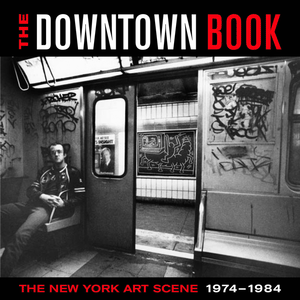
The Downtown Book: The New York Art Scene 1974-1984
Edited by Marvin J. Taylor
"This book charts the intricate web of influences that shaped the generation of experimental and outsider artists working in Downtown New York during the crucial decade from 1974 to 1984. Published in conjunction with the first major exhibition of downtown art (organized by New York University's Grey Art Gallery and Fales Library), The Downtown Book brings the Downtown art scene to life, exploring everything from Punk rock to performance art."
http://press.princeton.edu/titles/8017.html

Art After Midnight - Steven Hager
"The outrageous energy of the participants and their subsequent notoriety will carry the reader through this uncritical, discursive pop history of what Hager calls the "Global East Village." He begins with CBGB's and its development as the premier club for punk rock and the nihilistic youth culture of its audience. The author then covers various groupings that were to make Manhattan's East Village and neoexpressionism buzzwords of the '80s: Jean-Michel Basquiat, Kenny Scharf and Keith Haring receive extensive coverage, as well as performance artists like Ann Magnuson and "personalities" such as Patti Astor. The book culminates with the explosion of galleries in the East Village and its impact on the New York art marketplace. Hager's treatment is unremarkable but, as always, the East Village provides its own momentum."
http://www.amazon.com/Art-After-Midnight-Village-Scene/dp/0312049765
The Clash
The Clash were amazed with what they had seen in New York and recorded 'The Magnificent Seven', a rap-like hit which got airplay on black radio in New York. When they did 11 shows at the Bonds International in 1981, they invited Grandmaster Flash & the Furious Five to open their shows. But rather than "achieve a cultural cross-over, it threatened to widen the gap". The time wasn't ripe yet and Grandmaster Flash got booed off the stage. The later shows Treacherous Three and ESG (who they helped recording their first album) suffered the same fate. Futura 2000 who had designed some artwork for the show went on to record 'The Escapades of Futura 2000' with the group.
Colab & The Times Square Show (1980)
Colab is the commonly used abbreviation of the New York City artists' group Collaborative Projects, which was formed after a series of open meetings between artists of various disciplines. Colab came together as a collective in 1977. In June 1980 the collective took over an empty building that housed an erotic massage parlor in Times Square for an exhibition. Critics called it "punk art"; "three cord art anyone can play." The South Bronx art space Fashion Moda participated in the Times Square Show, bringing in some of the new generation of graffiti artists who had been exhibiting in the Bronx as part of the hip-hop culture of writers, rappers, and break dancers.
At the Times Square Show Fab 5 Freddy was introduced by Mudd Club curator Diego Cortez to Charlie Ahearn, a fellow Colab member, with whom he would later produce the 'Wild Style' movie. Here Freddy also met Keith Haring while the latter is unknowingly telling him about his own painting.
At the Times Square Show Fab 5 Freddy was introduced by Mudd Club curator Diego Cortez to Charlie Ahearn, a fellow Colab member, with whom he would later produce the 'Wild Style' movie. Here Freddy also met Keith Haring while the latter is unknowingly telling him about his own painting.
donderdag 24 maart 2011
1984 - the end: Beat Street
When real money got into the game, and hip hop was made into a marketing gimmick where a lot of pioneers felt exploited by a world they didn't know before. At the same time Downtown became an attractive place to live for people with more money. Rents soared and artists and galleries disappeared.
The movie 'Beat Street' is widely acknowledged to mark the end of this era and the start of hip hop going worldwide.
Wild Style is a much more natural dramatisation of the scene at the time.
The movie 'Beat Street' is widely acknowledged to mark the end of this era and the start of hip hop going worldwide.
Wild Style is a much more natural dramatisation of the scene at the time.
Michael Holman
Michael Holman was instrumental at the beginning and the end of the period of this blog. Holman put together the legendary package to open for Bow Wow Wow at the Ritz in September 1981 for Malcolm McClaren and opened the Negril club.
Having graduated New York University’s Graduate School of Film, Holman directed 'Catch a Beat' (the first B-boy/breakdance film (1981) and associate produced Beat Street for Orion Pictures (1984).
He also founded the band Gray - an industrial atmospheric, noise group - with painter Jean-Michel Basquiat, as well as created and produced the first Hip Hop television show 'Graffiti Rock'.
There's an indepth audio interview about his history here:
Having graduated New York University’s Graduate School of Film, Holman directed 'Catch a Beat' (the first B-boy/breakdance film (1981) and associate produced Beat Street for Orion Pictures (1984).
He also founded the band Gray - an industrial atmospheric, noise group - with painter Jean-Michel Basquiat, as well as created and produced the first Hip Hop television show 'Graffiti Rock'.
There's an indepth audio interview about his history here:
Documentaries: Downtown Calling & Coolest Year in Hell
Very important documentary featuring all the key players of the early scene.
Another great view on the bankrupt New York and what started it all is MTV's 'NY77: Coolest Year in Hell'.
Another documentary has been produced specifically about the No Wave cinema which emerged at that time
To get a feel of Times Square at the time check out this short documentary.
Another great view on the bankrupt New York and what started it all is MTV's 'NY77: Coolest Year in Hell'.
Another documentary has been produced specifically about the No Wave cinema which emerged at that time
To get a feel of Times Square at the time check out this short documentary.
Fab 5 Freddy
Growing up in the Bedford-Stuyvesant section of New York, Freddy first entered the underground culture as a popular graffiti artist. Using the tags "Bull 99" and "Fred Fab 5," Freddy's work became a fixture on subway cars and walls throughout the city. Graduating from high school in the late '70s, the young artist studied painting at Medgar Evans College where he emulated the pop art of Andy Warhol. After fostering a friendship with music columnist and Warhol's 'Interview' editor Glenn O'Brien, Freddy became a cameraman and regular guest on his public-access show. It was through this friendship that Fab Five was introduced to the downtown hipster scene which included Debbie Harry of the group Blondie, Warhol, Keith Haring, and Jean-Michel Basquiat (Harry even mentioned Freddy in the lyrics of Blondie's 1981 hit "Rapture").
Source: http://www.answers.com/topic/fab-five-freddy
We have yet to find information on how Fab ended up in this German gem...
Source: http://www.answers.com/topic/fab-five-freddy
We have yet to find information on how Fab ended up in this German gem...
fab 5 freddie rocks the mic from HolyRollertv on Vimeo.
Rock Steady Crew
Henry Chalfant was the first manager of the Rock Steady Crew. He soon quit because he thought he wasn't commercial and aggresive enough to continue. Kool Lady Blue followed him up. During the filming of Style Wars between 81 and 82, the crew got world famous and the film's focus changed from a short b-boy film to a hip hop movie with Greek tragedy elements. At the end of 1982 they were asked to perform in the movie 'Flashdance'. In November 1983, they were asked by the Queen of England to perform at the Royal Variety Performance in aid of the Artist's Benevolent Fund. During these spectacular performances Charisma Records approached the Rock Steady Crew with a record deal. The record 'Hey You, The Rock Steady Crew' was in the top ten charts in Great Britain and sold over a million copies. The Crew, however, saw very little of the proceeds. Due to their lack of knowledge of the music industry at such a young age, the company took advantage of the Crew and would not allow them any creative input toward their own project.
When Charisma Records went out of business and was sold to Virgin Records, the group was put on hold indefinitely. During this time, the crew's management told them not to dance in clubs. They tried to convince them that it was in their best interest not to dance they way they love to. Just for fun...Another sign the period had ended.
Style Wars
Vintage footage on the Rock Steady Crew
When Charisma Records went out of business and was sold to Virgin Records, the group was put on hold indefinitely. During this time, the crew's management told them not to dance in clubs. They tried to convince them that it was in their best interest not to dance they way they love to. Just for fun...Another sign the period had ended.
Style Wars
StyleWars from stylewars on Vimeo.
Vintage footage on the Rock Steady Crew
Celluloid & The European Connection
In the summer of 1982, the Wheels of Steel parties started at the Roxy. As these parties started getting popular people like journalist Bernard Zekri and Jean Karakos from the french label Celluloid would come and connect with Afrika Bambaata and his Zulu crew. This way the New York City Rap Tour emerged; the first tour of France and the UK. In June 1982, 'Planet Rock' was released and at the end of that year the first international Roxy tour visited France and the UK. Bambaataa organized this very first European hip hop tour. Along with himself were rapper and graffiti artist Rammellzee, Zulu Nation DJ Grand Mixer DXT (formerly Grand Mixer D.St), B-boy and B-girl crews the Rock Steady Crew, and the Double Dutch Girls, as well as graffiti artists Fab 5 Freddy, PHASE 2, Futura 2000, and Dondi. The Rock Steady Crew were immediately signed to UK based label Charisma Virgin and had their pop chart success with ‘Hey You, The Rock Steady Crew’.
Most artists on this rap tour were got released on Celluloid. Celluloid already had a business relationship with Michael Zilkha and Michael Esteban's No Wave label Ze Records for distributing the new No Wave music. All these connections led to the idea to start exploiting the emerging Downtown meets Uptown scene. Releases like B-Side with Fab 5 Freddy ('Change the Beat'), Futura 2000 ('Escapades of Futura 2000', produced by the Clash when they were in town) and Phase2 ('The Roxy'). Most of the hip hop productions were done by the group Material, whose prime mover Bill Laswell would play an increasing role in the label's fortunes for the next five years.
Afrika Bambaataa began working with Bill Laswell and at Celluloid he developed and placed two groups: Time Zone and Shango. He recorded "Wildstyle" with Time Zone, and he recorded a collaboration with punk-rocker John Lydon and Time Zone in 1984, titled "World Destruction". Shango's album, "Shango Funk Theology", was released by the label in 1984. That same year, Bambaataa and other hip hop celebrities appeared in the movie Beat Street, signalling the end of the period.
Most artists on this rap tour were got released on Celluloid. Celluloid already had a business relationship with Michael Zilkha and Michael Esteban's No Wave label Ze Records for distributing the new No Wave music. All these connections led to the idea to start exploiting the emerging Downtown meets Uptown scene. Releases like B-Side with Fab 5 Freddy ('Change the Beat'), Futura 2000 ('Escapades of Futura 2000', produced by the Clash when they were in town) and Phase2 ('The Roxy'). Most of the hip hop productions were done by the group Material, whose prime mover Bill Laswell would play an increasing role in the label's fortunes for the next five years.
Afrika Bambaataa began working with Bill Laswell and at Celluloid he developed and placed two groups: Time Zone and Shango. He recorded "Wildstyle" with Time Zone, and he recorded a collaboration with punk-rocker John Lydon and Time Zone in 1984, titled "World Destruction". Shango's album, "Shango Funk Theology", was released by the label in 1984. That same year, Bambaataa and other hip hop celebrities appeared in the movie Beat Street, signalling the end of the period.
Kool Lady Blue, Negril and the Roxy
Ruza Blue, known as Kool Lady Blue, began one of New York's most popular nightclubs - the Roxy. It started as a roller skating ring and disco in the Chelsea section of Manhattan and became a hip hop club in the 1980s.
Born into a working class English family, Ruza moved to New York and lived in the Chelsea hotel before starting a weekly dance party for her British friends.
The trend took off and helped spark an entire hip hop culture. In this first person account Kool Lady Blue recalls the wild days of the Roxy and the role she played in America's cultural history.
Check out a recent interview with Kool Lady Blue bringing back memories on the BBC.
Born into a working class English family, Ruza moved to New York and lived in the Chelsea hotel before starting a weekly dance party for her British friends.
The trend took off and helped spark an entire hip hop culture. In this first person account Kool Lady Blue recalls the wild days of the Roxy and the role she played in America's cultural history.
Check out a recent interview with Kool Lady Blue bringing back memories on the BBC.
zaterdag 1 mei 2010
Beyond Words (1981)
In April 1981 Fab 5 Freddy curated an exhibition with Keith Haring and Futura 2000 in the Mudd Club called "Beyond Words: Graffiti Based-Rooted-Inspired Works". At the opening he brought in the Cold Crush Brothers, Fantastic Freaks and Bambaataa's Jazzy Five MC's to perform. This is claimed to be the first time Downtown and Uptown were brought together.
One month later Freddy was booked on Henry Chalfant's "Graffiti Rock" performance with Rock Steady Crew at Common Ground gallery in SoHo (not to be confused with Holman's Graffiti Rock TV show pilot). That show was cancelled due to violence, but was rescheduled in October 1981 at another venue called "The Kitchen".
Here Fab 5 is talking about the Beyond Words show and his meeting with Keith Haring.
One month later Freddy was booked on Henry Chalfant's "Graffiti Rock" performance with Rock Steady Crew at Common Ground gallery in SoHo (not to be confused with Holman's Graffiti Rock TV show pilot). That show was cancelled due to violence, but was rescheduled in October 1981 at another venue called "The Kitchen".
Here Fab 5 is talking about the Beyond Words show and his meeting with Keith Haring.
Patti Astor's FUN Gallery
Patti Astor describes her and Fab 5 Freddy as "the queen from Downtown meets the king of Uptown" and "the artworld would never be the same". You might know her as the lady ('Virginia') from Wild Style. Astor went on to co-found the FUN Gallery in early 1981 with partner Bill Stelling. This tenement storefront gallery, was the first of the 1980s East Village galleries, and specialised in showing graffiti artists, like Fab 5 Freddy, LEE (Quinones), Zephyr, Dondi, Lady Pink, and Futura 2000. It also gave important shows to Kenny Scharf (in 1981), Jean Michel Basquiat (November 1982), and Keith Haring (February, 1983), artists with a street background who showed elsewhere.
For a while the mix of worlds was unique, with the FUN crew of downtown artists and hipsters, beat-boys, rock, movie and rap stars mixing with both neighborhood kids and the official art world: museum directors, art historians and uptown collectors in their mink coats and limos. The gallery closed in 1985, by which time many other East Village galleries had opened, the interest in graffiti painters in the art world has subsided, and rents in the East Village were rising dramatically.
Check out her mini bio documentary:
For a while the mix of worlds was unique, with the FUN crew of downtown artists and hipsters, beat-boys, rock, movie and rap stars mixing with both neighborhood kids and the official art world: museum directors, art historians and uptown collectors in their mink coats and limos. The gallery closed in 1985, by which time many other East Village galleries had opened, the interest in graffiti painters in the art world has subsided, and rents in the East Village were rising dramatically.
Check out her mini bio documentary:
Glenn O’Brien's TV Party
The cable TV show where all the usual suspects hung out, hosted by Glenn O'Brien former editor at Andy Warhol's Interview and music journalist so he was very well connected in the art and music scene. Glen and TV Party were Fab 5 Freddy's ticket into the Downtown scene. In this excellent interview he recalls:
I reached out to Glenn O’Brien, who was doing a music column in the magazine called “Glenn O’Brien’s Beat.” I loved the way he wrote about all different kinds of music—funk, reggae, new wave, and punk. I wanted to interview him for my college radio station. I was attending Medgar Evers College [of The City University of New York] for a short period. So that’s how I met him, and Glenn told me he was going to do a public-access TV show called TV Party. He said he wanted to have me on as a guest, because at that time I was also telling him about the beginning of hip-hop music—rap music, if you will, because at the time it really wasn’t known as hip-hop. And I was also telling him about graffiti and that I had been a graffiti artist and was interested in moving into the art world. I told Glenn, “I’d love to be a cameraman on your show.” He said, “Fred, you’ve never done that before. You can’t be the cameraman, but I’d love to have you come by and be a guest on the show.” When I showed up for the first episode, the guy who was supposed to operate one of the two cameras wasn’t there. Glenn looked at me and said, “Fred, get on that camera.” [laughs] I became one of the show’s cameramen and a regular guest. That was the beginning of my friendship with Glenn and many of the cool people that I would meet.
I reached out to Glenn O’Brien, who was doing a music column in the magazine called “Glenn O’Brien’s Beat.” I loved the way he wrote about all different kinds of music—funk, reggae, new wave, and punk. I wanted to interview him for my college radio station. I was attending Medgar Evers College [of The City University of New York] for a short period. So that’s how I met him, and Glenn told me he was going to do a public-access TV show called TV Party. He said he wanted to have me on as a guest, because at that time I was also telling him about the beginning of hip-hop music—rap music, if you will, because at the time it really wasn’t known as hip-hop. And I was also telling him about graffiti and that I had been a graffiti artist and was interested in moving into the art world. I told Glenn, “I’d love to be a cameraman on your show.” He said, “Fred, you’ve never done that before. You can’t be the cameraman, but I’d love to have you come by and be a guest on the show.” When I showed up for the first episode, the guy who was supposed to operate one of the two cameras wasn’t there. Glenn looked at me and said, “Fred, get on that camera.” [laughs] I became one of the show’s cameramen and a regular guest. That was the beginning of my friendship with Glenn and many of the cool people that I would meet.
Jean-Michel Basquiat
Basquiat is one of the key figures as he, Michael Holman and Fab 5 Freddy brought a different dynamic to the mostly white, navel-gazing Downtown scene. Downtown 81 was directed by Glen o'Brien and as it features all the protagonists of the time it is essential viewing.
Downtown 81
The Radiant Child has rare interview footage and offers perspectives by his contemporaries.
Downtown 81
The Radiant Child has rare interview footage and offers perspectives by his contemporaries.
The Mudd Club

Those who made it in found a narrow, shadowy room, a flickering strobe and a D.J. who might swing from funk to punk to junk in the space of three tracks. There was an alarming-looking cage, and sometimes the electric rolling gate at the end of the room would ease up to reveal a band (one of the first was the B-52's). Though it was Mass's $15,000 that got the Mudd Club open, it was Phillips and "curator-at-large" Diego Cortez who shaped its personality. They made Mudd an antidisco manifesto, hijacking the glittering totems of uptown exclusivity -- from velvet rope to V.I.P. room -- and dumping them in the dingy Lower East Side dive.
"New York was elegant and sleazy," he says. "Now it's a shopping mall for dot-commers. We need our crime rate back. I want my muggers and hookers back."
Read more about the club in this NYT article Mudd Quake
Architect of the Mudd Club Diego Cortez explains about the No Wave scene's exhibition New York \New Wave PS 1 in Queens, 1981
Frank Zappa's tribute to the club (1980)
Abonneren op:
Posts (Atom)